Esther 4:13–16 · WEB
For Such a Time: Esther 4:13–16
An Esther 4 reflection on courageous solidarity, wise preparation and refusing to face dangerous responsibility alone.
10 minutesRead
Esther 4:13–16
Open Esther 4:13–16 in the World English Bible. Read the whole passage slowly, noticing the real danger, Mordecai’s challenge, Esther’s decision and the support she requests.
Reading prompt · World English Bible
Arrive
“For such a time as this” is often printed as an inspiring slogan. In Esther, it emerges inside fear, political danger and a threat against an entire people.
Read the dialogue without removing the cost.
Reflect
Mordecai refuses the illusion that privilege guarantees safety. Esther’s position gives access, but it also creates responsibility toward people whose danger she shares.
Esther does not confuse courage with impulsiveness. She names the risk and asks the community to fast. Preparation and dependence are part of bravery.
Her words, “If I perish, I perish,” are not permission to demand reckless sacrifice from others. The choice is hers, made in solidarity and supported by her people.
Where does your access create responsibility? Seek the voices most affected, prepare carefully and refuse to let the person carrying greatest risk stand alone.
Pause and notice
A few questions to sit with
- What risk in this story should not be romanticised?
- How could your access serve people with less power?
- What support should surround a courageous action?
Pray
God of courage and justice, make me responsible with whatever access I hold. Protect the vulnerable and form communities that prepare, act and stand together. Amen.
Carry it with you
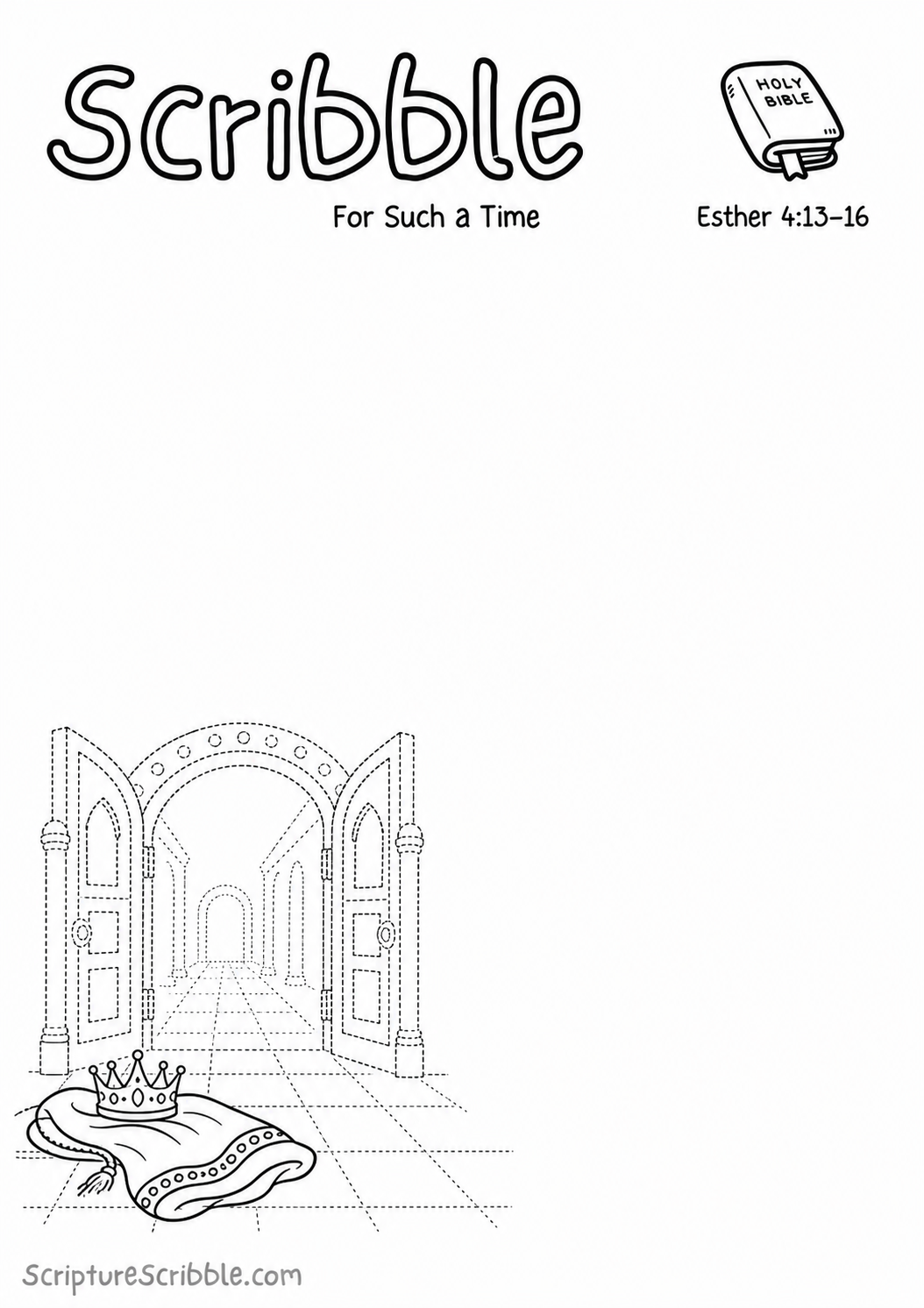
Add three small symbols beyond the doorway: counsel, preparation and support. Take one step that shares risk more fairly.
Draw
Esther 4:13–16 For Such a Time Devotional Drawing Page Printable
Continue reflecting with the printable connected to this passage.
Keep exploring
Related reflections

devotional drawing page
Esther 4:13–16 For Such a Time Devotional Drawing Page Printable
A free Esther 4:13–16 drawing printable with a deliberately unfinished palace doorway, robe and unfinished corridor scene, inviting readers to notice the passage and complete the picture in their own way.

Esther 9:20–22
A Celebration Shared: Esther 9:20–22
An Esther 9 devotional about Purim as remembrance, shared food and dignified generosity after communal danger, with care around the chapter’s violent context.

Esther 7:3–6
Esther Speaks for Her People: Esther 7:3–6
An Esther 7 devotional about speaking specifically against harm, using access for communal protection and making threatened people visible to power.