Hosea 11:1–9 · WEB
Love That Will Not Let Go: Hosea 11:1–9
A thoughtful Hosea 11:1–9 reflection on God’s anguished parental love, moral seriousness and refusal to let destruction have the final word.
10 minutesRead
Hosea 11:1–9
Open Hosea 11:1–9 in the World English Bible. Read the whole passage slowly, noticing the parental actions, Israel’s turning away and the internal movement from anger toward compassion.
Reading prompt · World English Bible
Arrive
Hosea portrays God as a parent who taught Israel to walk, bent down to feed, grieves rejection and recoils from total destruction.
Read the passage slowly and notice the parental actions, Israel’s turning away and the internal movement from anger toward compassion.
Reflect
The poem remembers teaching a child to walk and lifting food to a cheek. Divine care is patient, physical and tender.
Israel’s rejection is not minimised. Love tells the truth about betrayal and the destructive direction of persistent injustice.
God’s compassion grows warm and interrupts complete destruction. Holiness is revealed not as uncontrolled rage but as mercy refusing annihilation.
Parental imagery must never excuse abusive control. Love worthy of God protects life, honours agency and does not demand unsafe return.
Pause and notice
A few questions to sit with
- Which images show tender care?
- How does compassion interrupt judgment?
- How can love remain truthful without becoming controlling?
Pray
Holy God of warm compassion, hold us without control and correct us without destruction. Teach us love that protects life and tells the truth. Amen.
Carry it with you
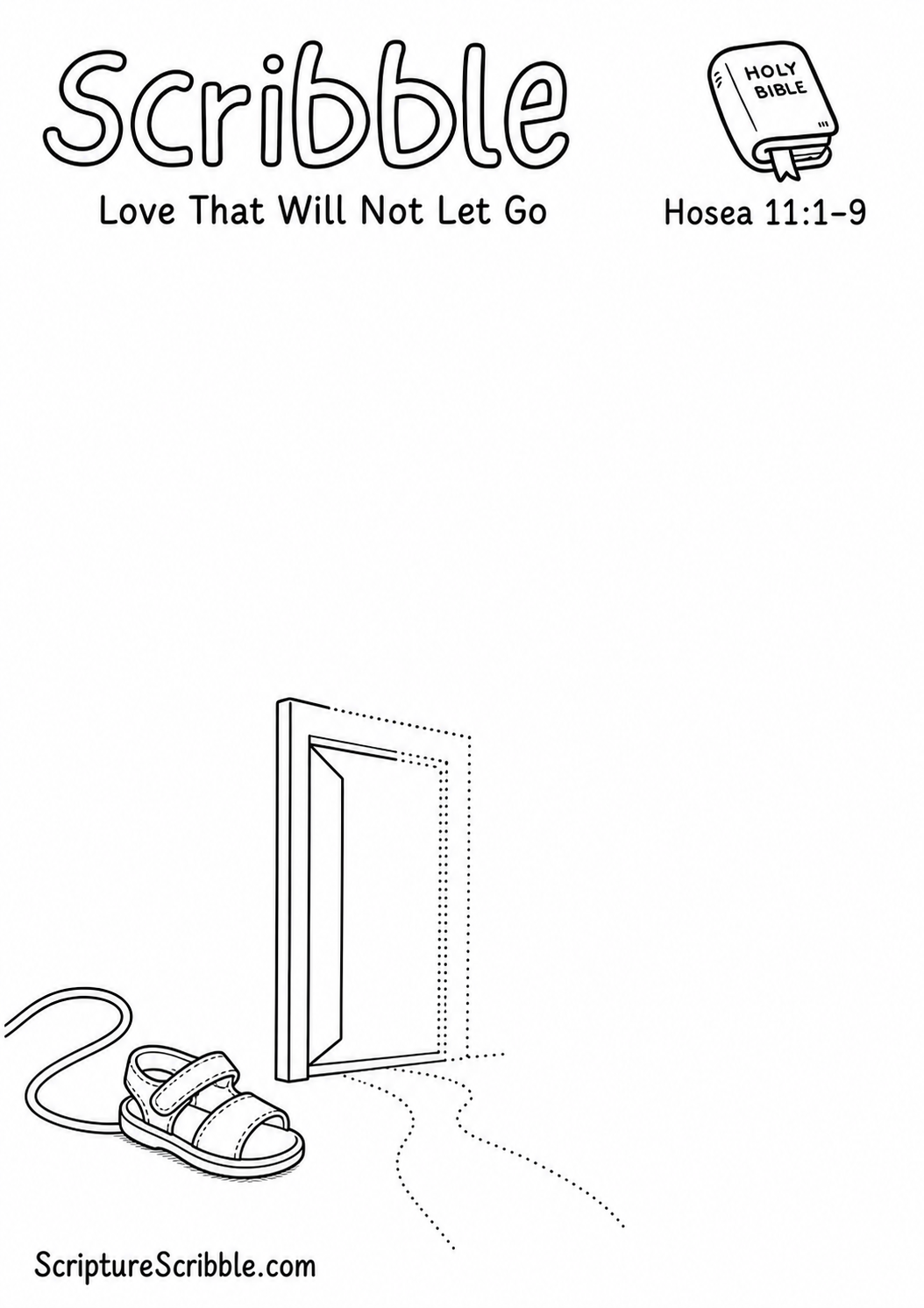
Complete the open doorway as a safe place. Strengthen one boundary or practice that makes care less controlling.
Draw
Hosea 11:1–9 Love That Will Not Let Go Devotional Drawing Page Printable
Continue reflecting with the printable connected to this passage.
Keep exploring
Related reflections

devotional drawing page
Hosea 11:1–9 Love That Will Not Let Go Devotional Drawing Page Printable
A free Hosea 11:1–9 drawing printable with a deliberately unfinished small sandal, guiding cord and unfinished doorway scene, inviting readers to notice the passage and complete the picture in their own way.
Hosea 8:1–7
Sowing the Wind: Hosea 8:1–7
A Hosea devotional for Hosea 8:1–7 with a grounded reflection, questions, prayer and a practical next step. The prophet connects false worship, self-made leadership and unfaithful alliances with consequences that grow beyond the original choices.
Hosea 5:13–15
When False Help Cannot Heal: Hosea 5:13–15
A Hosea devotional for Hosea 5:13–15 with a grounded reflection, questions, prayer and a practical next step. Israel and Judah seek an empire to cure their wound, but political power cannot heal the covenant sickness beneath it.